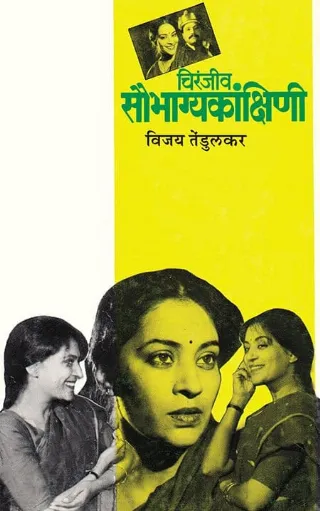
Vijay Tendulkar (1928–2008) was the playwright who gave modern Marathi theatre its unflinching voice. His plays set aside the sentimental conventions of the Marathi stage for social realism, exposing hypocrisy, the abuse of power and human frailty without softening what he saw, and they often drew bans, protests and controversy.
Born in Kolhapur on 6 January 1928, he grew up among books in a home where his father, a clerk, also ran a small publishing house. He wrote his first play at the age of six and at fourteen, in 1942, left school to join the Quit India movement. From 1948 he worked as a journalist, first as a sub-editor at Navabharat and later at Acharya Atre's Maratha and at Loksatta.
Shrimant (1955) was his first professionally staged full-length play. Shantata! Court Chalu Aahe (1967), Ghashiram Kotwal (1972), which drew on folk theatre to examine authoritarian power, and Sakharam Binder (1972) made him the central figure of his generation. He also wrote the screenplays for Manthan (1976), Aakrosh (1980) and Ardh Satya (1983), which won him the National Film Award for Best Screenplay. He received the Sangeet Natak Akademi Award and later its Fellowship, and the Padma Bhushan in 1984. He died on 19 May 2008.