About this book
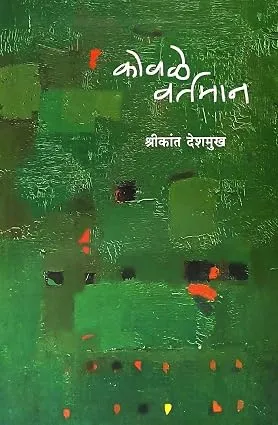
Kovale Vartaman is a novel that encompasses the educational, social, and cultural environment of a particular period. It is not merely the story of one individual, Kamaji Karlekar. The collective voices that emerge through the narrative reveal the inner workings of society as a whole.
Indeed, the novel’s bold attempt to present, on a broad canvas, the meaning of life discovered through acquired knowledge and intellectual traditions establishes an affinity with the outspoken, forthright spirit of Tukaram, who relentlessly attacked hypocrisy.
Shrikant Deshmukh’s novel demonstrates a remarkable ability to explore the deeper layers of caste realities and unravel the many persistent issues that occasionally erupt to the surface, through a sociological perspective.
Seen through the eyes of a new generation of students belonging to dryland farming families, the narrative gradually unfolds a dismal picture of a deteriorating education system and the artificial, hollow ideologies emerging from it. The discussions and dialogues within the story bring these realities vividly to life.
One of the distinctive features of Shrikant Deshmukh’s writing is his narrative style, which expands the story while capturing subtle details of social observation through irony, sarcasm, and wit.
Connecting the tradition of sociological inquiry represented by the intellectual span between S. V. Ketkar and Bhalchandra Nemade, this novel emerges as a compelling and reflective literary discourse.
The tensions between differing ideas and ideologies—both overt and subtle—continually surface through the conversations of diverse individuals who represent the many forgotten faces of society. Consequently, the novel gradually takes the shape of an extended monologue. Through continuous reflection, this monologue develops a distinctive structure that encompasses both individual contemplation and collective thought.
— Satish Badwe
Book images
About the author

श्रीकांत देशमुख | Shrikant Deshmukh
View Full ProfileMore by Shrikant Deshmukh
Reviews & ratings
No reviews yet — be the first to share what you thought of this book.
Sign in to write a reviewNothing written here yet.