About this book
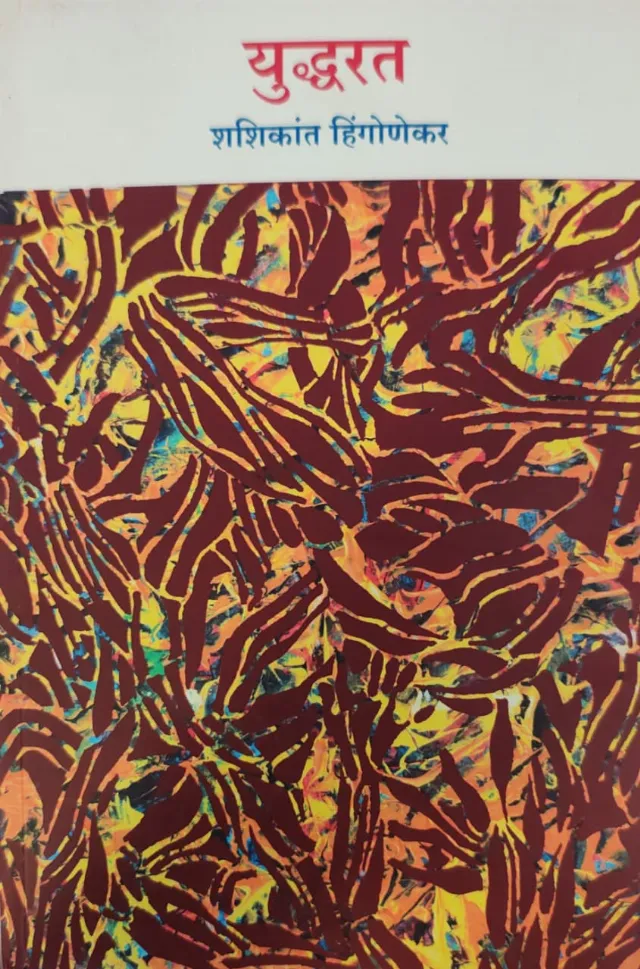
Poet Shashikant Hingonekar is one of the leading voices in contemporary Ambedkarite poetry. He has consistently preserved both his identity as a participant in the movement and his commitment to poetry. The journey of his poetry, from Yuddha Suru Aahe (The War Is On) to his more recent work Yuddharat (Engaged in War), continues relentlessly along a road obstructed by the established system.
Although his poetry is marked by an anguish that unsettles the mind, its protagonist stands alert and determined, holding on to poetry as a guiding force and preparing the ground within his home and heart to confront an endless, universal struggle. His poetry encompasses the seeds of dreams planted within him and the vast expanse of lightning flashing across the sky. These forces never allow him to rest.
He writes:
“The days of the past have still not come to an end. The desert of neglect continues to surround me on every side. The forest of humiliation keeps growing taller and taller. The rusted weapons have been sharpened and made ready. Only then can I cut through all this darkness and embrace the sky of dreams.”
These rebellious sensibilities help us understand the state of perpetual struggle that defines his poetry. The circumstances that make everyday life difficult, along with the terror they generate, compel him to open the doors to his dreams every day. For him, those doors remain perpetually closed. Consequently, his poetry cannot easily move beyond the present to envision the dreams of the future, nor can it forget its past. Its existence remains suspended between all three dimensions of time—past, present, and future—while continuing to act and respond. At every moment, it remains deeply connected with the collective experience of society.
For this poet, therefore, poetry is a process of putting truth into practice. The history revealed through poetry inspires us and the marginalised world around us to awaken, to live, and to find the strength to continue living. This is precisely why we cannot disregard the poetry of the Panther era or overlook the remarkable volume of creative work produced during that period. We must not forget that this entire body of writing carried the constitutional influence and humane vision of a great visionary.
Poetry brought forward, as history, the accumulated suffering endured by earlier generations. The present-day system, the reality of contemporary poetry suffocated within it, and the struggles experienced against the backdrop of current circumstances constitute the central concerns of Hingonekar’s poetry.
The poet attempts to record his commentary and distinctive voice in verse even in response to the most recent events. Perhaps he fears that, tomorrow, even his freedom of expression may come under threat. He himself admits, “I feel afraid to speak without poetry.” This statement hints at the possibility of something deeply troubling. It underscores the exceptional importance of poetry in expressing Ambedkarite consciousness—a significance that can never be forgotten.
Words give the mind wings with which to think. They give our eyes the vision of knowledge and the ability to dream. This is why the poet asks:
“What must those people be like in whose eyes dreams never blossom?”
The search initiated by this question leads ordinary readers towards a deeper awareness of what it means to be human. Every word in this poetry becomes a comprehensive voice against the injustice inflicted upon the people whose experiences it represents.
Although this voice is engaged in an unceasing struggle, the Buddha within it remains awake, as does the compassion inherent in his teachings. From this perspective, Shashikant Hingonekar’s poetry is profoundly significant in today’s turbulent century. Otherwise, who would read this chronicle of suffering? Perhaps, in times such as these, poetry may be the only means of expression left to us.
— Da. Go. Kale
Book images
About the author
Reviews & ratings
No reviews yet — be the first to share what you thought of this book.
Sign in to write a reviewNothing written here yet.