सुमती लांडे आणि शब्दालय—छोट्या शहरातून उभा राहिलेला साहित्यप्रवासSumati Lande and Shabdalay—A Literary Publishing Journey from a Small Town
१ एप्रिल १९८४1 April 1984
श्रीरामपूरसारख्या छोट्या शहरातून सुमती लांडे यांनी दिवाळी अंक, पुस्तक विक्री आणि प्रकाशनाच्या माध्यमातून शब्दालयचा साहित्यप्रवास उभा केला. १९८४ मधील शब्दालय पुस्तक भांडारापासून १९८८ मध्ये स्थापन झालेल्या शब्दालय प्रकाशनापर्यंतच्या वाटचालीची नोंद या लेखात आहे.
From Shrirampur, Sumati Lande developed Shabdalay’s literary journey through a Diwali annual, bookselling and independent publishing. The article documents Shabdalay Pustak Bhandar’s establishment in 1984 and the founding of Shabdalay Prakashan in 1988.
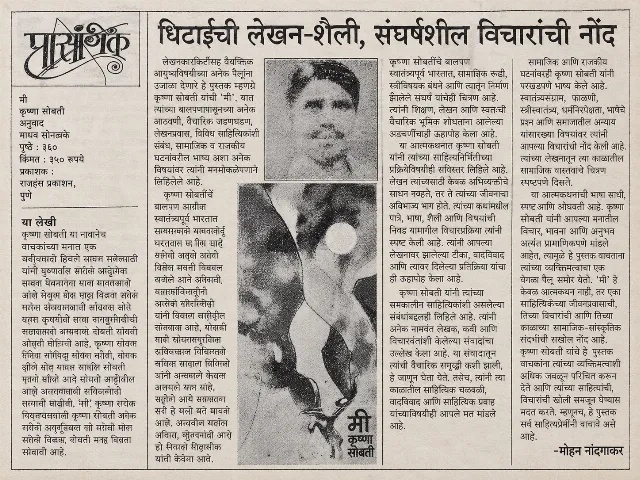
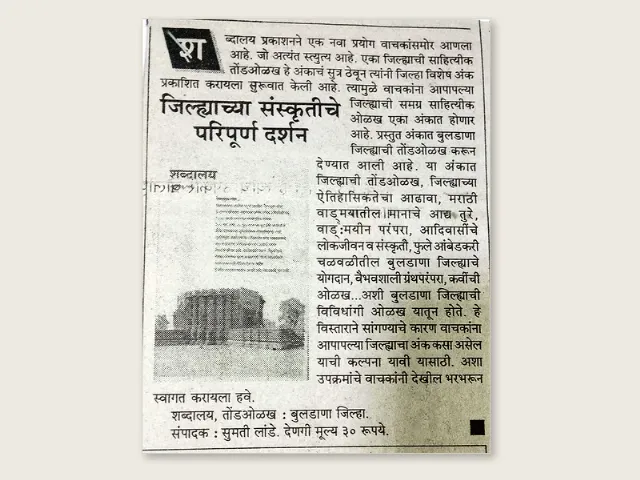
या वृत्तपत्रीय लेखात शब्दालयच्या संस्थापिका सुमती लांडे यांच्या साहित्यिक, व्यावसायिक आणि सांस्कृतिक वाटचालीचा परिचय करून देण्यात आला आहे. मराठी साहित्य आणि प्रकाशन क्षेत्र विशिष्ट शहरी परिघात फिरत असताना छोट्या शहरांतील लेखकांना प्रसिद्धी मिळवून देणे आणि त्यांचे साहित्य वाचकांपर्यंत पोहोचवणे ही कठीण जबाबदारी असल्याचे लेखाच्या सुरुवातीला नमूद केले आहे.
श्रीरामपूरसारख्या शहरात राहून सुमती लांडे यांनी शब्दालय दिवाळी अंक प्रकाशित केला. या अंकाला पारितोषिकेही मिळाली. साहित्याशी असलेले नाते पुढे नेत त्यांनी कर्ज घेऊन १९८४ मध्ये शब्दालय पुस्तक भांडार सुरू केले. ग्रामीण भागात दर्जेदार पुस्तके उपलब्ध करून देणे आणि वाचकांमध्ये पुस्तकसंस्कृती विकसित करणे हा या उपक्रमामागील महत्त्वाचा उद्देश होता.
१९८८ मध्ये सुमती लांडे यांनी शब्दालय प्रकाशनाची स्थापना केली. स्वतः कवयित्री असलेल्या लांडे यांनी साहित्यिक आणि सांस्कृतिक उपक्रमांच्या माध्यमातून नव्या लेखकांना प्रोत्साहन दिले. प्रकाशनाच्या वाटचालीत आर्थिक अडचणी, पुस्तक विक्रीची मर्यादित व्यवस्था, वितरणातील अडथळे आणि ग्रामीण भागात वाचकांपर्यंत पोहोचण्याची आव्हाने होती. मात्र त्यांनी जिद्दीने हे कार्य सुरू ठेवले.
लेखात शब्दालयने प्रकाशित केलेल्या विविध लेखकांच्या पुस्तकांचा उल्लेख आहे. भालचंद्र नेमाडे यांच्या लेखनावरील संपादित ग्रंथ, प्रवीण बांदेकर यांचा काव्यसंग्रह आणि इतर लेखक-कवींची पुस्तके प्रकाशित करून शब्दालयने वेगवेगळ्या साहित्यप्रवाहांना व्यासपीठ उपलब्ध करून दिले.
शब्दालयची भूमिका केवळ पुस्तके प्रकाशित करण्यापुरती मर्यादित राहिली नाही. मेळावे, पानटपऱ्या आणि इतर अनौपचारिक विक्रीकेंद्रांच्या माध्यमातून पुस्तकांचे गठ्ठे तळागाळातील वाचकांपर्यंत पोहोचवण्याचा प्रयत्न करण्यात आला. ग्रामीण भागातील वाचक आणि साहित्य यांच्यामधील अंतर कमी करण्याच्या या धडपडीमुळे शब्दालयची स्वतंत्र ओळख निर्माण झाली.
पुरुषप्रधान समजल्या जाणाऱ्या प्रकाशन व्यवसायात श्रीरामपूरसारख्या शहरातून एका स्त्रीने उमेद, जिद्द आणि सातत्याने स्वतंत्र वाट निर्माण करणे विशेष उल्लेखनीय असल्याचे लेखात नमूद केले आहे. सुमती लांडे यांचे कार्य ग्रामीण महाराष्ट्रातील सांस्कृतिक परिवर्तनाशी जोडले गेले आहे.
शब्दालयच्या या साहित्यिक आणि प्रकाशन कार्याला मुंबई मराठी साहित्य संघाचा वि. पु. भागवत स्मृतिपुरस्कार मिळाल्याचाही लेखात उल्लेख आहे. हा सन्मान शब्दालयच्या दर्जेदार प्रकाशनकार्याची आणि मराठी साहित्याला दिलेल्या योगदानाची महत्त्वपूर्ण नोंद आहे.
शब्दालयच्या Press & Media संग्रहातील हे कात्रण संस्थेच्या स्थापनेचा इतिहास, सुमती लांडे यांचे नेतृत्व, महिला उद्योजकता, ग्रामीण लेखकांना मिळालेले व्यासपीठ आणि मराठी पुस्तकसंस्कृतीच्या प्रसारासाठी केलेले प्रयत्न जतन करणारा महत्त्वपूर्ण दस्तऐवज आहे.
This newspaper article introduces the literary, entrepreneurial and cultural journey of Sumati Lande, founder of Shabdalay. It begins by observing that Marathi literature and publishing were largely concentrated within a limited urban circle, making it difficult for writers from smaller towns and rural areas to publish and distribute their work.
Working from Shrirampur, Sumati Lande published the Shabdalay Diwali annual, which received recognition and awards. She further developed her association with books by establishing Shabdalay Pustak Bhandar in 1984 with the help of a loan. The initiative sought to make quality Marathi books available locally and strengthen reading culture in the region.
In 1988, Sumati Lande founded Shabdalay Prakashan. A poet herself, she encouraged new authors through literary and cultural initiatives. The publishing journey involved financial constraints, limited bookselling infrastructure, distribution difficulties and the challenge of reaching readers in rural Maharashtra. Lande nevertheless continued the work with determination.
The article refers to several works and writers associated with Shabdalay. These include an edited volume on the writings of Bhalchandra Nemade, a poetry collection by Pravin Bandekar and books by several other writers and poets. Through such publications, Shabdalay created space for diverse literary voices.
Shabdalay’s contribution extended beyond conventional publishing. Books were distributed through literary gatherings, small retail outlets, paan shops and other informal networks to reach grassroots readers. This effort to reduce the distance between Marathi literature and rural audiences gave Shabdalay a distinctive publishing identity.
The article particularly recognises Sumati Lande’s achievement as a woman establishing an independent publishing organisation in a field traditionally dominated by men. Her work from a smaller town is presented as an important contribution to cultural transformation in rural Maharashtra.
The article also records that Shabdalay received the V. P. Bhagwat Memorial Award from Mumbai Marathi Sahitya Sangh. This recognition reflects the quality of Shabdalay’s publishing work and its contribution to Marathi literature.
Preserved in Shabdalay’s Press & Media archive, this clipping is an important historical record of the publication house’s beginnings, Sumati Lande’s leadership, women’s entrepreneurship, opportunities created for rural writers and the wider development of Marathi book culture.