‘सुबरान’—साकूरच्या भूमिपुत्रांचे जीवनगाणेSumbaran—The Life Song of Sakur’s Native Community
१२ फेब्रुवारी २००७12 February 2007
newspaper
प्रसिद्धीPublished inनाशिक देशदूतNashik Deshdoot
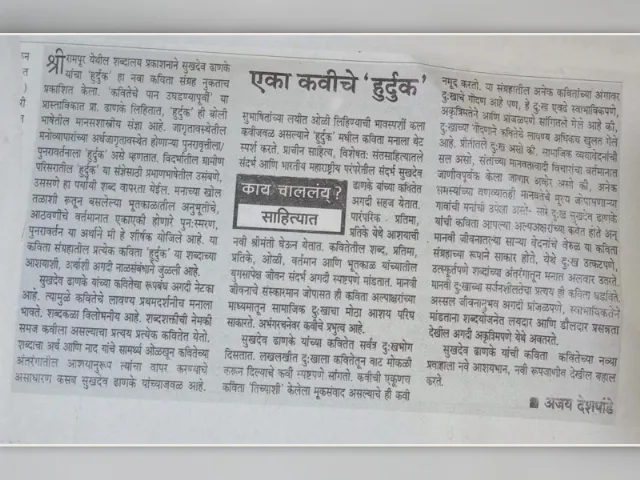
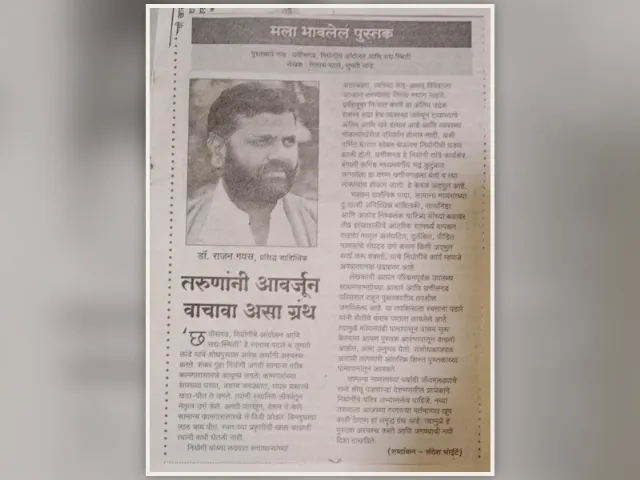
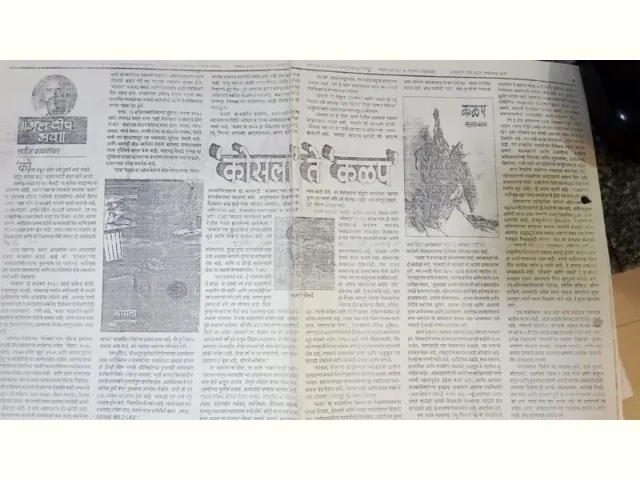
निवृत्त न्यायाधीश दिनकर यमाजी शेलार यांच्या ‘सुबरान’ या आत्मचरित्रात्मक पुस्तकातून साकूर गावातील ग्रामीण जीवन, शिक्षणासाठीचा संघर्ष आणि भूमिपुत्रांच्या अनुभवांचे संवेदनशील चित्रण घडते. परीक्षक श्याम उगले यांनी पुस्तकातील सामाजिक आशयाचा घेतलेला हा वेध शब्दालयच्या News & Media संग्रहातील महत्त्वपूर्ण साहित्यिक दस्तऐवज आहे.
Retired judge Dinkar Yamaji Shelar’s autobiographical book Sumbaran presents a sensitive account of rural life in Sakur, the struggle for education and the experiences of its native community. Shyam Ugale’s review is an important literary document preserved in Shabdalay’s News & Media archive.
‘साकूरच्या भूमिपुत्रांचे जीवनगाणे’ या शीर्षकाखाली परीक्षक श्याम उगले यांनी निवृत्त न्यायाधीश दिनकर यमाजी शेलार यांच्या ‘सुबरान’ या आत्मचरित्रात्मक पुस्तकाचा परिचय करून दिला आहे. शेलार यांच्या जीवनातील अनेक महत्त्वपूर्ण प्रसंग स्वतंत्रपणे रेखाटत असतानाच ग्रामीण महाराष्ट्राचे सामाजिक वास्तव पुस्तकातून प्रभावीपणे समोर येते.
साकूर गावातील ग्रामीण वातावरण, धनगर समाजाचे जीवन, शिक्षणाच्या संधींचा अभाव आणि प्रतिकूल परिस्थितीतून पुढे जाण्याची जिद्द हे पुस्तकाचे महत्त्वाचे आशयसूत्र आहे. शिक्षणासाठी शहरात राहणे, ग्रामीण भागातील विद्यार्थ्यांना जाणवणारी असुरक्षितता आणि सामाजिक संघर्ष यांचे लेखकाने अनुभवाधारित वर्णन केले आहे.
न्यायाधीश म्हणून काम करताना आलेले अनुभव, न्यायव्यवस्थेची कार्यपद्धती आणि समाजातील विविध स्तरांशी आलेला संबंध यांनाही पुस्तकात स्थान मिळते. त्यामुळे ‘सुबरान’ हे केवळ वैयक्तिक आत्मचरित्र न राहता ग्रामीण जीवन, शिक्षण, सामाजिक विषमता आणि न्यायव्यवस्था यांचा दस्तऐवज ठरते.
शब्दालयच्या News & Media संग्रहातील हे वृत्तकात्रण मराठी आत्मचरित्र, ग्रामीण साहित्य आणि सामाजिक इतिहासाशी संबंधित महत्त्वपूर्ण नोंद आहे. पुस्तक परीक्षणे, लेखकांचे अनुभव आणि ग्रामीण महाराष्ट्राचे साहित्यिक चित्रण वाचकांपर्यंत पोहोचवण्याच्या शब्दालयच्या व्यापक साहित्यिक भूमिकेशी हा लेख जोडलेला आहे.
In the review titled “The Life Song of Sakur’s Native Community,” Shyam Ugale examines Sumbaran, an autobiographical work by retired judge Dinkar Yamaji Shelar. While narrating significant episodes from Shelar’s life, the book also offers a compelling representation of rural Maharashtra and its social realities.
The narrative explores childhood in Sakur, life within the Dhangar community, limited educational opportunities and the determination required to overcome adverse circumstances. It records the uncertainty experienced by rural students who move to cities for education and the social barriers encountered during that journey.
Shelar’s experiences as a judge add another dimension to the narrative. His observations concerning the judicial system, social inequality and people from different sections of society transform Sumbaran from a personal life story into a wider social document.
Preserved in Shabdalay’s News & Media archive, this newspaper clipping represents an important record of Marathi autobiography, rural literature and social history. It supports Shabdalay’s continuing commitment to bringing Marathi books, authors, literary criticism and accounts of rural Maharashtra to a wider readership.